If you’re planning a bathroom renovation, shower glass is one of those decisions that often seems simple at first. Then you start looking at options. Frameless. Semi-frameless. Fully framed. Different hardware finishes. Different glass thicknesses. Different price points. And suddenly what felt like a straightforward decision turns into another thing to research. The good news is that there isn’t one universally right answer. The better option depends on your bathroom layout, your priorities, and your budget. Here’s what homeowners should know.
What’s the Difference?
The most obvious difference is in the name. Framed shower enclosures use metal framing around the glass panels and door edges for structural support. Frameless shower enclosures rely on thicker tempered glass and minimal hardware instead of a full surrounding frame. Both serve the same basic purpose, but they create a very different look and come with different practical considerations.
Why Homeowners Choose Frameless Shower Glass
Frameless glass has become a popular choice for a reason. It creates a cleaner, more open look that tends to make bathrooms feel larger and less visually crowded. In primary bathroom renovations especially, many homeowners prefer the more modern appearance. Because there’s less visible hardware, tile work and other design details remain more visible, which can make the finished shower feel more custom. Frameless glass can also be easier to clean in some situations simply because there are fewer tracks and frame edges where soap residue and moisture tend to collect.
That said, frameless is not automatically the better option just because it’s popular.
The Downsides of Frameless Shower Glass
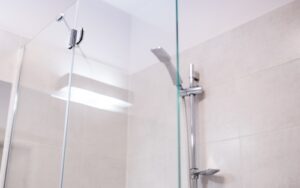 Cost is usually the first consideration. Frameless enclosures generally cost more than framed options because they use thicker glass, custom hardware, and more precise installation methods.
Bathroom layouts can also affect feasibility. Not every opening or configuration is equally well suited for frameless installation. Depending on the design, additional structural support or layout adjustments may be needed.
Water containment can also be a conversation.
Because frameless systems often have fewer seals than framed enclosures, design details matter. Proper layout, slope, panel placement, and installation become especially important for minimizing water escape. A well-designed frameless shower should perform well, but good planning matters.
Why Some Homeowners Still Choose Framed Enclosures
Framed shower enclosures still make sense in a lot of bathrooms. They are often a more budget-friendly option and can provide strong water containment because of the seals and framing system.
For homeowners focused primarily on function and cost control, framed enclosures can absolutely be a practical choice. Depending on the specific product, framed options may also offer more standard sizing flexibility, which can sometimes simplify installation.
The biggest reason some homeowners move away from framed enclosures is appearance. The heavier visual framing can feel more dated depending on the overall bathroom design. That said, “dated” is subjective, and product options have improved over the years.
Cleaning and Maintenance
This is one area where expectations should stay realistic. Some homeowners assume frameless automatically means less maintenance. Not exactly.
Glass is still glass.
Water spots, soap residue, and mineral buildup can happen on either option if maintenance is ignored. Framed enclosures may have more places where buildup collects around tracks or frame edges. Frameless systems eliminate some of that, but they still require routine cleaning to look their best.
Neither option is maintenance-free.
Which Option Costs More?
In most cases, frameless shower glass will cost more. 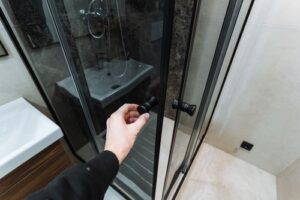
That’s because they usually have and require:
- thicker tempered glass
- custom fabrication
- premium hardware
- more specialized installation
- custom sizing requirements
Exact pricing varies depending on the size of the enclosure, hardware selections, layout complexity, and whether the installation is fully custom. If budget is a major factor in your bathroom renovation, shower glass is one of the places where costs can shift quickly.
Custom sizing and specialty installation can also affect how the renovation schedule shifts, especially when measurements, fabrication, or product availability change.
So Which One Is Better?
It depends on what matters most to you. If your priorities are a cleaner modern look, a more open visual feel, and a custom appearance, frameless may be the right fit. If your priorities are cost control, practical function, and strong water containment, framed may make more sense.
Neither choice is automatically right or wrong.
The better question is how the shower enclosure fits into the overall goals of your renovation. A beautiful frameless enclosure that stretches the budget in the wrong place may not be the best decision. A framed enclosure that fits the project well and functions exactly as needed may be the smarter choice.
That’s why these conversations are best made as part of the full bathroom design, not as an isolated product decision. If selections change after work begins, those updates should be clearly documented before the project moves forward so expectations stay aligned. When every detail supports the mood of a space, the result feels more intentional, much like a custom room shaped around comfort and character.
Give us a call when you’re ready to work through some of these details.