Project Spotlight · BEC Innovations
Saving the Substructure: A Porch Renovation Cost Breakdown
The Nations, Nashville · A Project Built Around What Was Already Working
Overview
The Project That Started With a Smaller Number
A year before reaching out to us, the homeowners on this project had spent thousands of dollars with an architect on a full renovation and expansion of their home in The Nations, Nashville. The plan never made financial sense for them — this isn’t their forever home, and the equity wasn’t there to support a build at that scale. When they came to us, they were worried we’d come in with another oversized pitch they couldn’t afford.
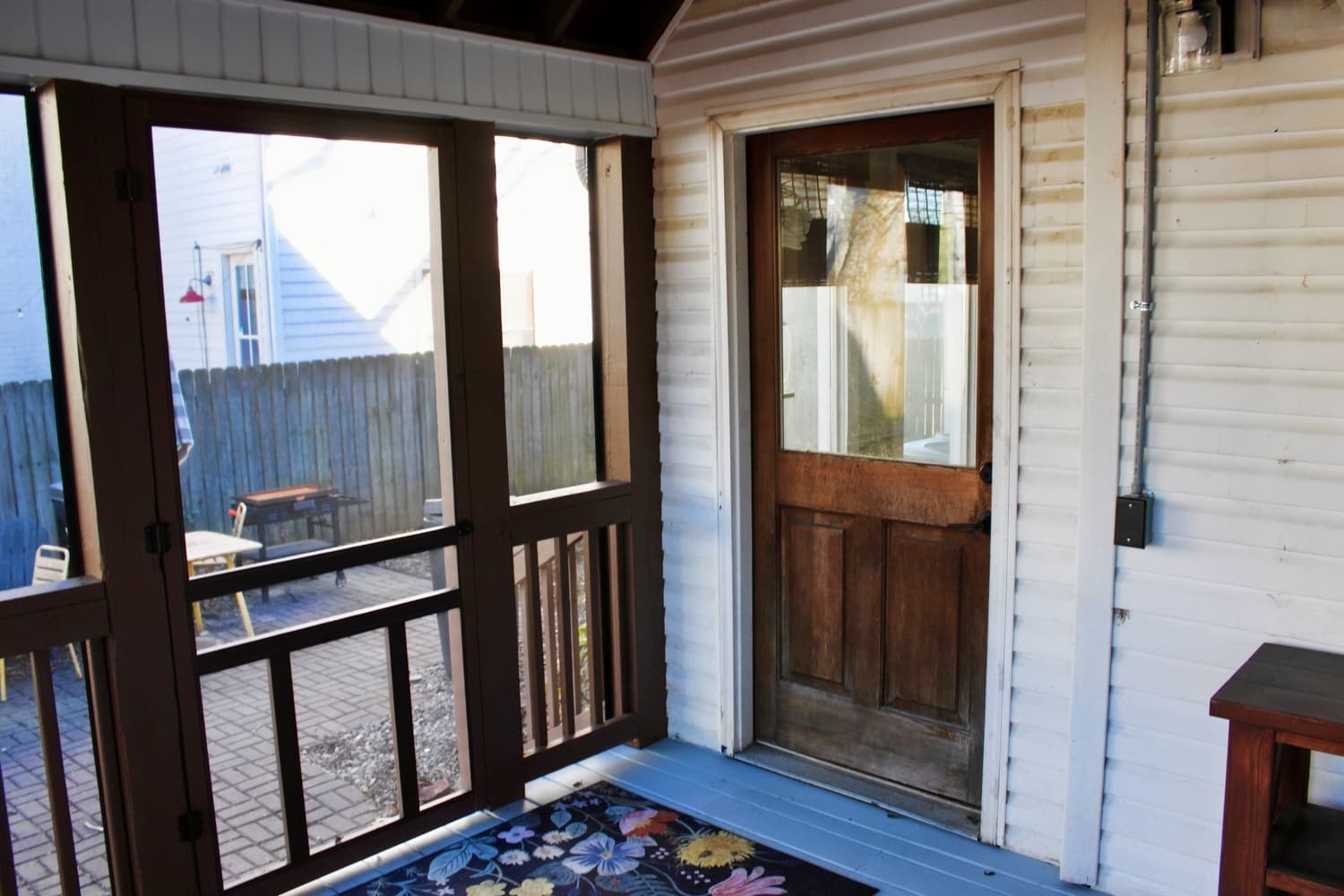
The back porch was the problem they actually needed solved. It was a two-level setup that had been let go over time. The upper deck off the primary bedroom sat in full sun and went unused, despite the established trees in the yard. The lower porch was screened, but critters had torn up the screening and the space was no longer usable. On top of that, the two levels weren’t connected from inside the home — to get from the back porch door to the screened porch, the homeowners had to go outside first.
What they wanted was straightforward: one entire covered porch that functioned as a single outdoor living space, with a metal roof so they could hear the rain, and a build that would hold up until they move on to their forever home in a few years.
Base Contract
$76,359
Fixed-price proposal
Change Orders
+$904
Net total of all change orders
Final Project Cost
$77,263
All-in, including every change order
What Was Included
The Original Scope, Built to Fit
We presented two paths up front. The first was the conventional one — remove the existing substructure and reconfigure the porch from the ground up. The second reused the substructure that was already there, after we confirmed the structural frame was in good shape. The homeowners chose the second path, and the $76,359 base contract was written around it. The contract covered:
- Reuse of the existing substructure. The structural frame had been inspected and determined to be sound, which made keeping it the more economical of the two options we’d offered.
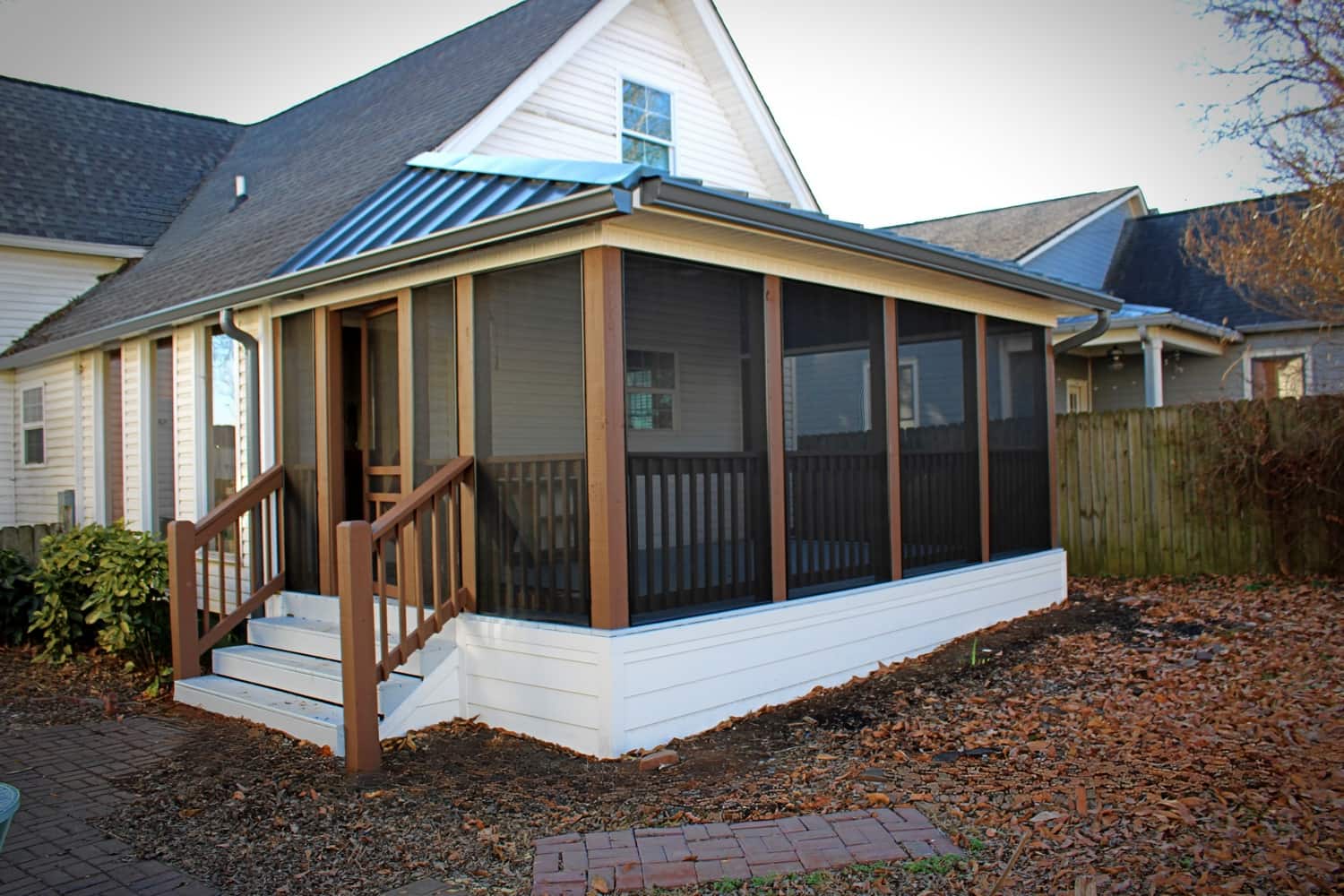
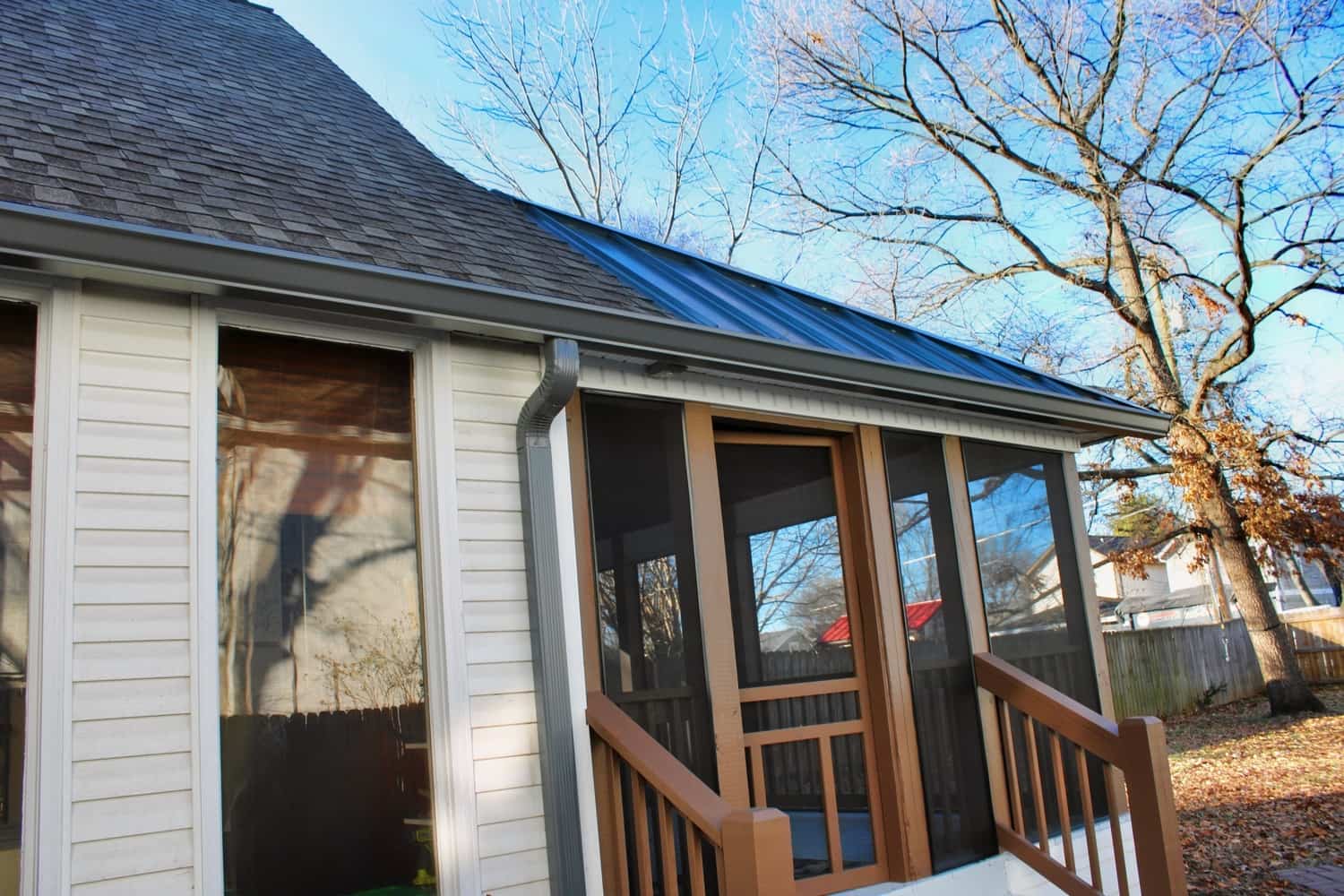
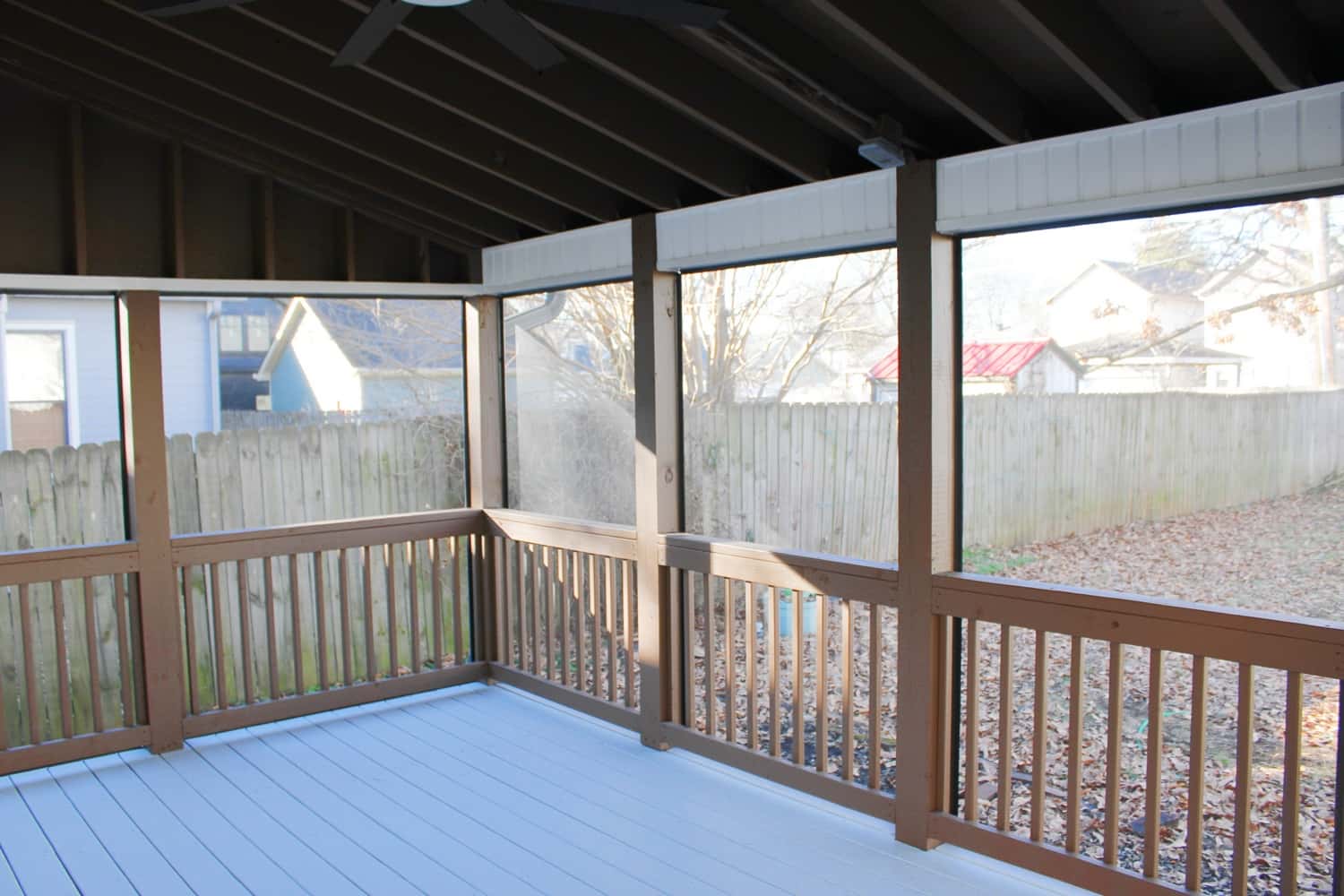
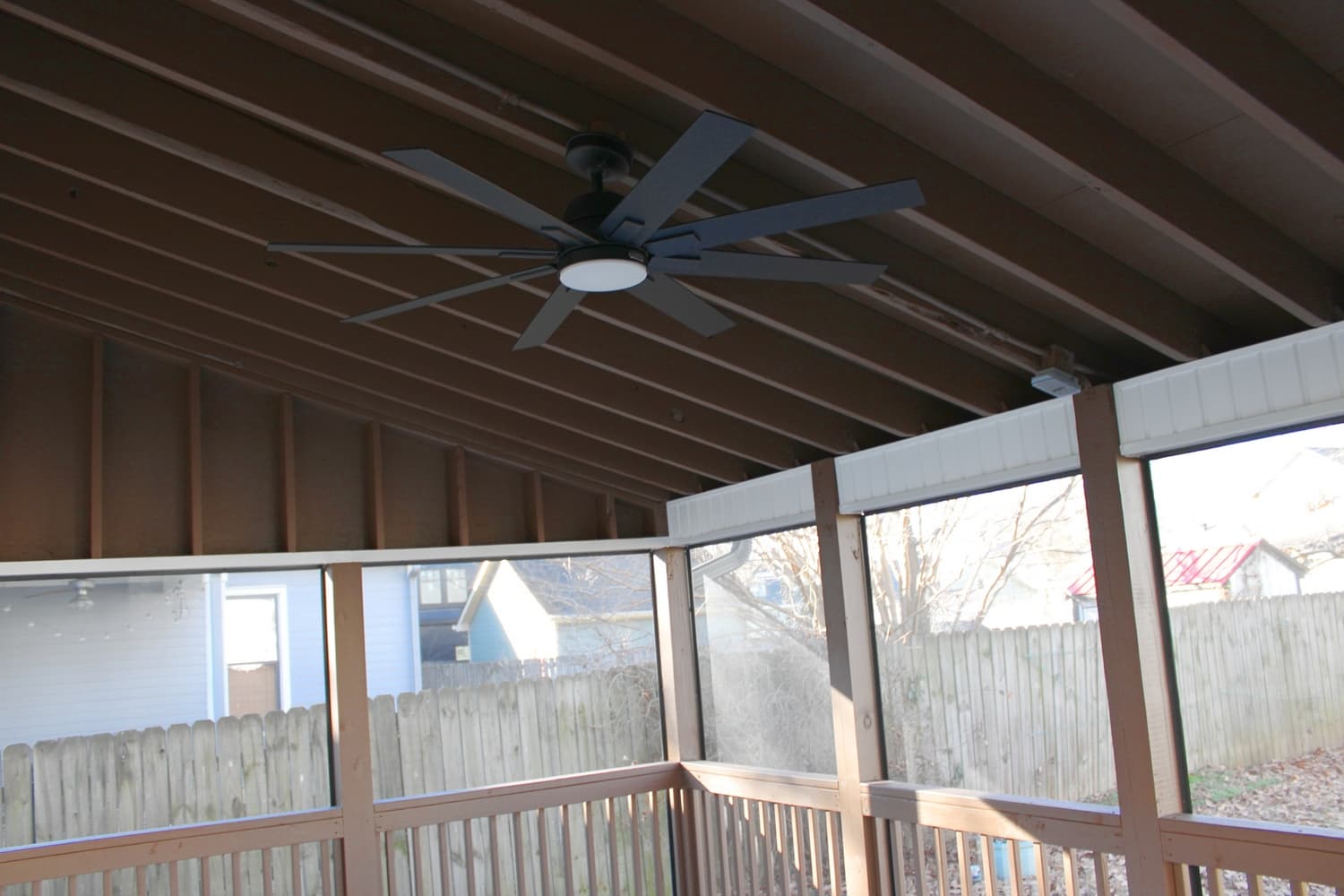
- Roof reframe and installation of a new metal roof. The homeowners specifically wanted metal so they could hear the rain hitting it from inside the porch.
- Treated wood framing throughout the rebuilt structure.
- Exposed-structure design, with the new framing left visible rather than clad or finished over.
- Treated wood railings to match the rest of the build.
The scope was sized for a finite ownership window. The homeowners plan to move on to their forever home in a few years, and the materials and configuration were chosen with that timeline in view — durable enough to perform well for the years they have left in this house, without the cost premium of finishes built for permanence they weren’t paying for.
What changed
Two Small Adjustments
This project had two change orders. Together they added $904.29 to the base contract — barely over 1% — which is about the smallest variance you can document on a project of this size.
Neither was the kind of structural surprise that tends to drive larger change orders. The substructure assessment we’d done before signing the contract held up once we were on-site, and the gutter add-on was a small mechanical addition rather than a scope expansion. Both were itemized for the homeowners and approved before the work was scheduled.
Before:
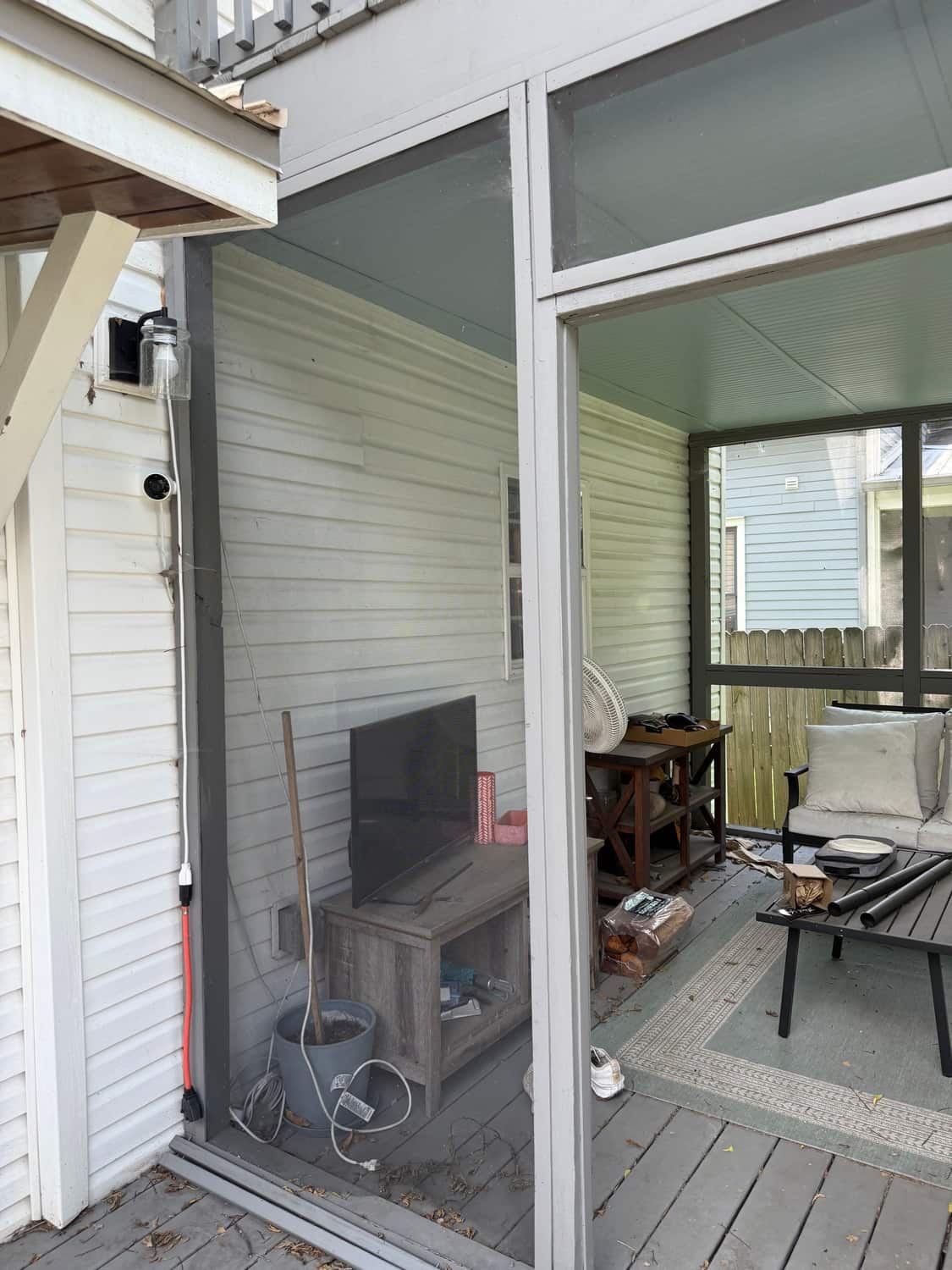
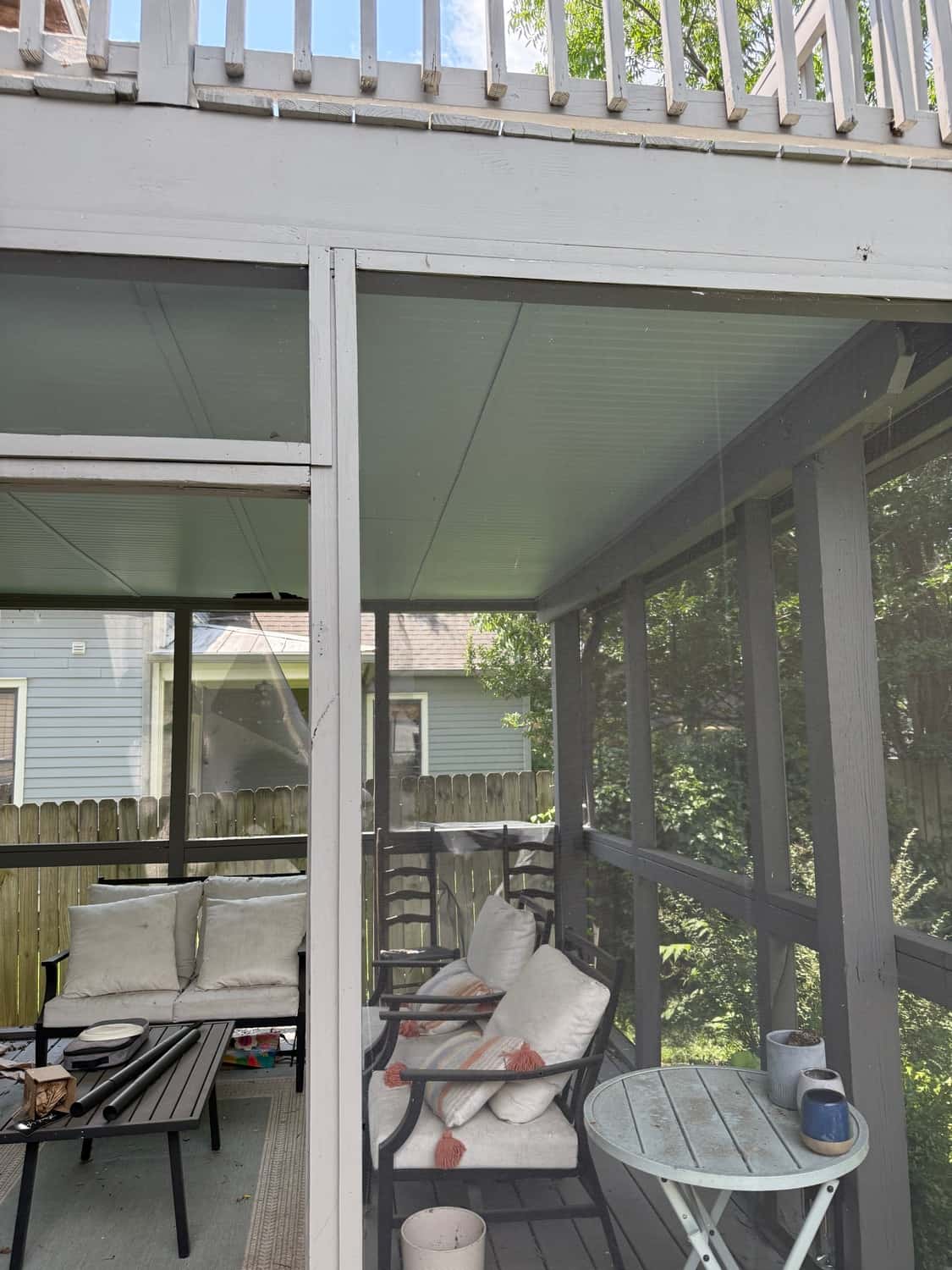
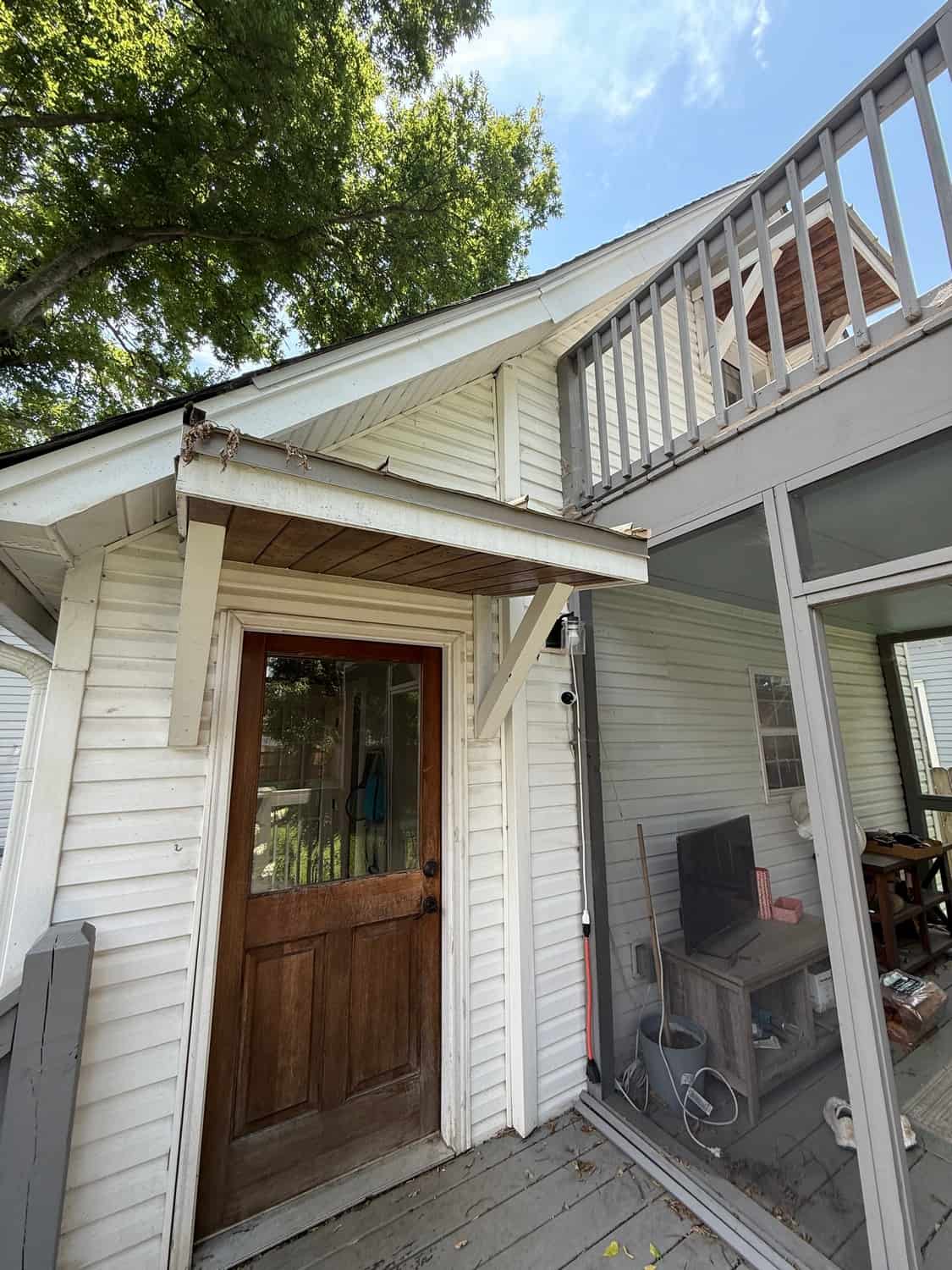
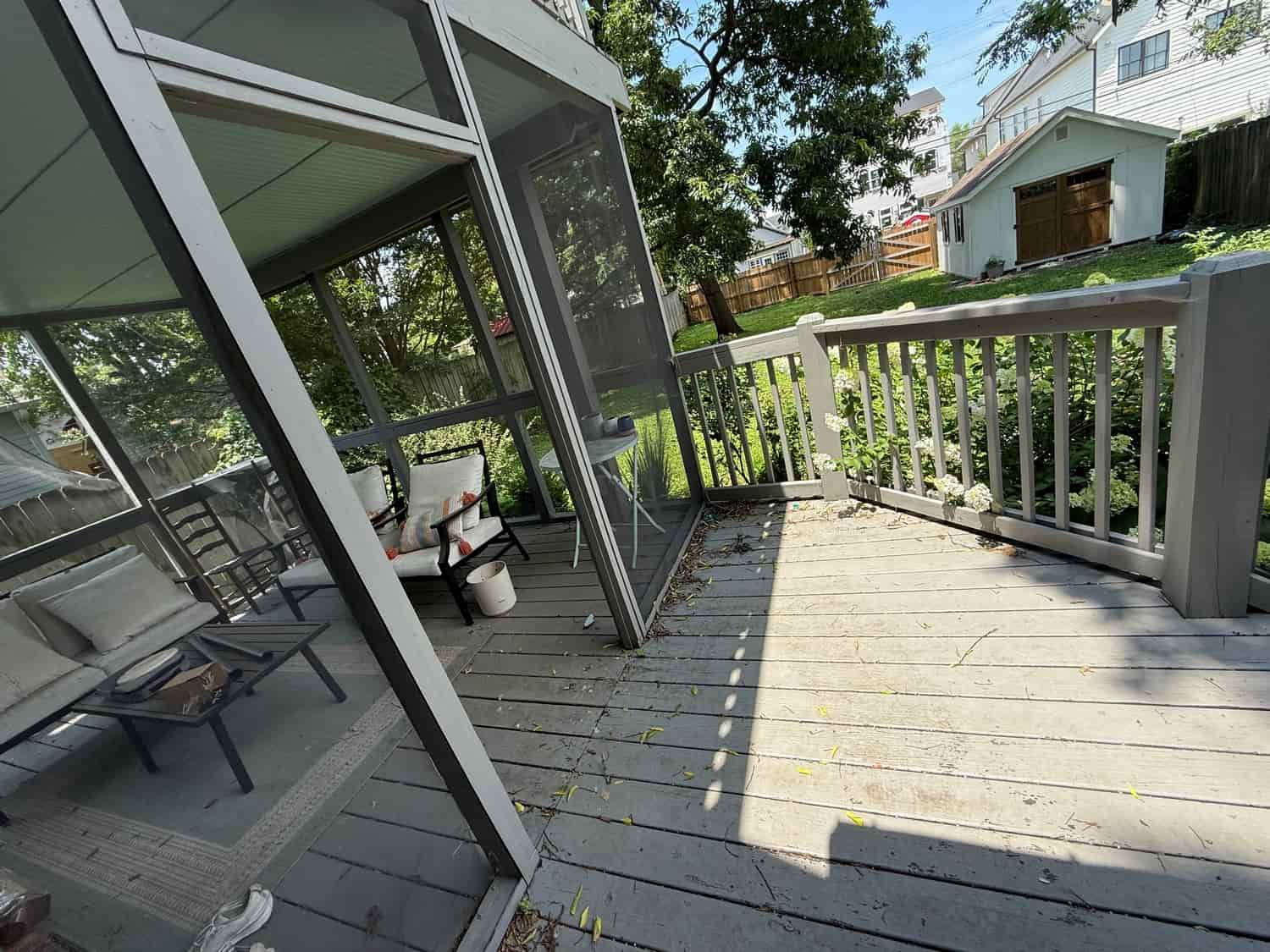
After:
The Bottom Line
Closing Within $1,000 of the Original Number
The two-level configuration the homeowners had before is now a single covered outdoor living space. The substructure that was already in good shape stayed in place. The new metal roof gives them the rain sound they wanted. The treated wood construction is built to hold up for the years they have left in the house before moving on to their forever home.
The total came to $77,263 — about 1.2% above the original $76,359 contract. That kind of variance comes from a scope that reflects what the home actually needs, contained surprises, and a contract that doesn’t grow on its own. For homeowners who’d already spent a year of their lives and thousands of dollars on a renovation that never made sense, the fact that this one closed within $1,000 of the original proposal mattered.
There’s a version of this story where a contractor walks into a conversation like this and sells the homeowners on the bigger project they couldn’t afford. That isn’t what happened. The two-path option we offered let the homeowners pick the scope that fit their situation, and the smaller path delivered the porch they actually wanted.
If you’ve been quoted a renovation that doesn’t fit the home you actually have, or the timeline you actually plan to be in it, a different scoping conversation is available. Project ambition should match the building, the equity, and the future the homeowners are actually planning for.